Retain entry condition, return condition and cohort age. Compare equivalent complete intervals and keep unobservable periods pending.
Define entry and what returning means
In a fictional shop, each customer enters once, in the month of their first completed purchase. Returning means another completed purchase in a later month. Count unique people, not orders; several purchases in a month count as one person in that cell.
Google Analytics explains cohorts through inclusion and return criteria. We use that conceptual distinction with fictional customer records, rather than a GA4 export. Its exploration has its own identification and calculation rules to review before translating this example into the tool.
Read group age as well as calendar time
Month 1 is the calendar month after entry; Month 2 follows it. These are not rolling thirty-day windows after individual purchases. Define time zone and month boundaries before real counting.
Cohort B begins a month after A. At the fictional cutoff, A has two complete subsequent months while B has one. Comparing them in one calendar month compares different ages. For the first subsequent month, read the same relative column.
Reconstruct a small table
| Cohort | Initial customers | Month 1: people and rate | Month 2: people and rate |
|---|---|---|---|
| A | 20 | 10 / 20 = 50% | 8 / 20 = 40% |
| B | 30 | 12 / 30 = 40% | Period not yet complete |
Each cell counts return in that month separately. A’s eight people in Month 2 need not be the same ten in Month 1: we require neither purchase in every preceding month nor cumulative returns. Retain that rule when reading the table.
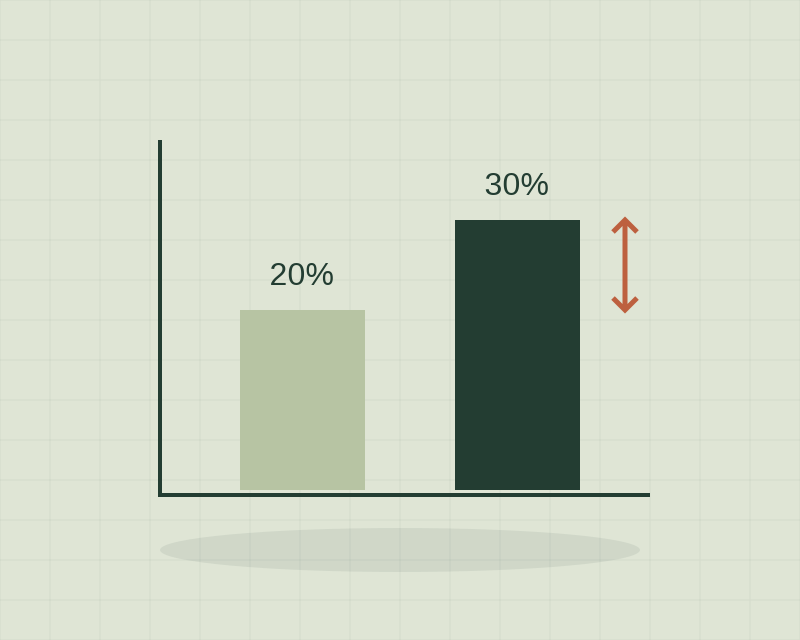
B adds 30 new customers against A’s 20, yet its first subsequent month rate is 40% against 50%. Both observations can coexist. Do not fill the final cell with zero: the period has not ended.
Retain bases and conditions before explaining
Our percentages guide explains differences between rates. The order mix guide examines another composition. Here the contribution is keeping the entry group fixed and following a time rule.
Ask whether products, channels, availability, customer identification or completed-purchase records changed. A different rate alone establishes neither better or worse service nor a promotional effect.
Separate missing observation from no return
- Incomplete period: no comparable window yet.
- Missing record: insufficient coverage to know the event.
- Observed zero: a complete window with no returns under the rules.
- Different customer identification: review counting continuity.
- Changed criterion: flag before joining series.
With small groups, one customer can change a rate considerably. Retain counts rather than hiding them behind colors or rounded percentages. Do not sum people across cells as though they were distinct customers.
Use the table to choose a next question
Investigate a lower-return cohort through permitted records or experience conversations. Our loyalty rules guide separates enrollment, activity and redemption; membership alone does not explain repeat purchase.
Keep definition, cutoff, counts, rates and open questions with the table. It shows the defined return in included periods, rather than the entire customer relationship or proof of profitability, satisfaction or causation.
Follow the evidence.
Sources checked October 25, 2026. Illustrative scenarios and numbers are fictional. The records and exercises are original editorial proposals, without attributed customer results or provider tests. Our editorial standards.