Presenta el mapa del juego y ensaya un turno sin puntuar. Después deja que cada persona decida, con las reglas de la edición a mano.
Acuerda qué tipo de partida quiere el grupo
Antes de desplegar componentes, pregunta cuánto tiempo hay, quién conoce el juego y si prefieren aprender durante una práctica. Aclara si la partida será competitiva o cooperativa y qué exige de lectura, espacio o manipulación. Comprueba necesidades concretas sin asumirlas por la experiencia de cada persona.
Prepara una mesa donde se alcancen los componentes y puedan leerse las referencias. La guía de espacios creativos ayuda a pensar en funciones antes que en muebles; aquí importa compartir una actividad, no diseñar un cuarto de juegos.
Explica el mapa antes de las excepciones
- Qué intenta conseguir cada persona o el grupo.
- Qué representan los componentes necesarios para comenzar.
- Qué acciones componen un turno normal y qué decisión se elige.
- Qué termina la partida y cómo se determina el resultado.
- Qué regla especial puede afectar la primera decisión.
Muestra las piezas mientras las nombras. Si una excepción cambia el costo o la legalidad de una acción inicial, explícala antes de que alguien elija. Las demás pueden localizarse en la referencia cuando surjan, sin ocultar información que una persona necesitaba para decidir.
Ensaya una decisión con piezas visibles
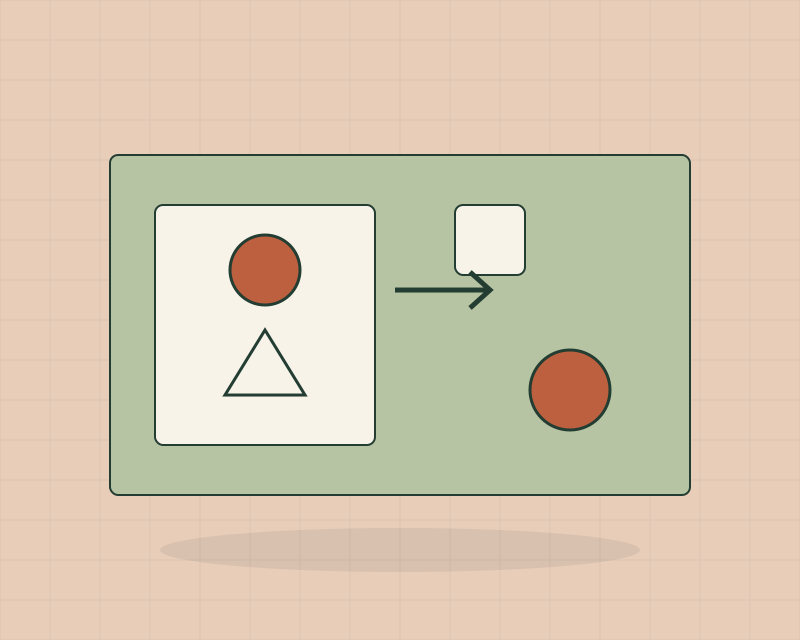
Este fragmento ficticio, “Tres señales”, solo demuestra una explicación: no es un juego completo ni una adaptación de uno publicado. En la zona común hay fichas de círculo, triángulo y cuadrado. El objetivo del ejercicio es reunir las tres formas distintas; el turno de práctica consiste en elegir una ficha visible y llevarla a tu zona.
La persona que explica señala las opciones y toma un círculo como demostración. Después otra persona elige una forma y cuenta qué hizo. Las formas permiten distinguir fichas sin depender solo del color. Al terminar, se devuelve todo a la posición inicial; la práctica no puntúa.
En un juego real, demuestra su turno completo con sus propias reglas, incluidos reposición o efectos que correspondan. No añadas al juego publicado las reglas de este ejercicio. Pregunta “¿qué opciones tienes ahora?” para comprobar la explicación, sin convertirlo en un examen.
Ayuda sin jugar el turno de otra persona
Ofrece aclarar consecuencias conocidas antes de recomendar una jugada. “Puedes elegir entre estas acciones” preserva más autonomía que mover las piezas por otra persona. Si piden una sugerencia, explica el criterio y deja que confirmen su elección.
Quien ya conoce el juego puede colaborar buscando una regla, sin corregir cada decisión como si hubiera una única forma de disfrutar. Acordar una primera partida de aprendizaje tampoco elimina las reglas: permite explicitar cómo tratar errores descubiertos tarde.
Localiza una duda en la edición correcta
Deja a mano el reglamento correspondiente y comprueba si hay aclaraciones oficiales. Como ejemplo de organización de consulta, la referencia oficial de Vantage incluye reglas, preguntas frecuentes y erratas. Esa existencia no significa que sus reglas sean aplicables a otros juegos ni que aquí se haya probado ese producto.
Ante una duda, identifica la acción y el momento exactos, busca el pasaje y léelo al grupo. Distingue una regla encontrada de un acuerdo provisional de la mesa. Si utilizan una variante propia, nómbrenla como tal y apliquen el mismo acuerdo a todas las personas.
Recoge una mejora para la siguiente explicación
Al terminar, pregunta qué parte costó entender y qué referencia ayudó. Conserva una nota breve para la próxima reunión: quizá el final debía explicarse antes o una pieza necesitaba un ejemplo. El cuaderno de lectura ofrece otra forma de registrar lo aprendido sin copiar todo el material.
Igual que el ejercicio de escucha por capas, una segunda pasada puede revelar algo que la primera no mostró. La meta de enseñar es que el grupo pueda participar y decidir; no hace falta recitar el reglamento entero ni atribuir a una partida beneficios que no se han observado.
Teach a Board Game with a First Practice Turn
Someone who knows a game may remember every exception and forget what a newcomer needs to begin. A useful explanation makes the objective clear, enables a personal decision and supports a rule question without losing the table’s conversation.
Present the game’s map and rehearse a turn without scoring. Then let each person decide, with the correct edition’s rules nearby.
Agree what kind of session the group wants
Before laying out components, ask how much time is available, who knows the game and whether people prefer a practice round. Explain whether play is competitive or cooperative and what reading, space or handling it requires. Check concrete needs without assuming them from someone’s experience.
Prepare a table where components are reachable and references readable. Our creative spaces guide helps consider functions before furniture; here the task is sharing an activity, rather than designing a game room.
Explain the map before the exceptions
- What each person or the group is trying to achieve.
- What the components needed at the start represent.
- Which actions make up a normal turn and which decision is chosen.
- What ends the game and how the result is determined.
- Which special rule could affect the first decision.
Show pieces as you name them. If an exception changes the cost or legality of an initial action, explain it before someone chooses. Other rules can be located in the reference as they arise, without withholding information someone needed for a decision.
Rehearse a decision with visible pieces
This fictional fragment, “Three Signals,” only demonstrates an explanation: it is neither a complete game nor an adaptation of a published one. The shared area contains circle, triangle and square tokens. The exercise’s objective is to collect all three different shapes; the practice turn consists of choosing a visible token and moving it to your area.
The teacher points out the options and takes a circle as a demonstration. Another person then chooses a shape and describes what they did. Shapes distinguish tokens without relying only on color. At the end, everything returns to its initial position; practice does not score.
For a real game, demonstrate its complete turn under its own rules, including replenishment or effects where applicable. Do not add this exercise’s rules to a published game. Ask “What options do you have now?” to check the explanation without making it a test.
Help without playing someone else’s turn
Offer to clarify known consequences before recommending a move. “You can choose among these actions” preserves more autonomy than moving someone’s pieces for them. If they request a suggestion, explain the reasoning and let them confirm the choice.
An experienced player can help look up a rule without correcting every decision as though there were only one way to enjoy play. Agreeing on a learning game does not remove its rules: it makes handling late-discovered mistakes explicit.
Look up a question in the correct edition
Keep the relevant rulebook nearby and check for official clarifications. As an example of organized lookup, the official Vantage reference includes rules, frequently asked questions and errata. Its existence does not make those rules applicable to other games or mean that this publication tested that product.
For a question, identify the action and exact moment, locate the passage and read it to the group. Distinguish a found rule from a provisional table agreement. If using a house variant, identify it as such and apply the same agreement to everyone.
Keep one improvement for the next explanation
Afterward, ask what was difficult to understand and which reference helped. Keep a short note for the next gathering: perhaps the ending needed explaining earlier or a piece needed an example. Our reading notebook offers another way to record learning without copying all the material.
As with our layered listening exercise, a second pass can reveal something the first did not. Teaching aims to let the group participate and decide; it does not require reciting the entire rulebook or attributing unobserved benefits to a game.
用第一个练习回合教朋友玩桌游
熟悉游戏的人可能记得所有例外,却忘了新人开始时需要什么。有用的讲解应让人明白目标、做出自己的决定,并能在不失去桌边交流的情况下查询疑问。
先介绍游戏全貌,再进行不计分的练习回合。随后让每个人自己决定,并把对应版本的规则放在手边。
先约定这次想怎样玩
摆出配件前,询问可用时间、谁玩过,以及大家是否愿意先练习。说明是竞争还是合作,涉及多少阅读、桌面空间或操作。根据具体情况询问需要,不凭经验多少替别人假设。
准备能拿到配件、读清参考资料的桌面。本站家庭创作空间指南帮助先想功能再想家具;这里要解决的是共同活动,并非设计游戏房。
先讲全貌,再讲例外
- 每个人或全组想达到什么目标。
- 开始时需要的配件代表什么。
- 正常回合有哪些动作,其中选择什么。
- 游戏何时结束,怎样判定结果。
- 哪项特殊规则会影响第一次决定。
介绍名称时展示对应配件。例外若改变初始动作的成本或合法性,应在选择前说明。其他规则可出现时查询,但不能隐瞒做决定所需的信息。
用可见配件练习一次选择
以下虚构片段“三种信号”仅演示讲解,不是完整游戏,也不是改编已出版作品。公共区域有圆形、三角形和方形标记。练习目标是收集三种不同形状;练习回合只需选择一个可见标记,移到自己区域。
讲解者指出选项,拿一个圆形示范。另一人再选择一种形状,说明自己做了什么。用形状区分,不仅依赖颜色。结束后恢复初始位置,练习不计分。
实际游戏应按自身规则展示完整回合,包括适用的补充或效果。不要把本练习规则加进出版游戏。用“你现在有哪些选项?”核对讲解是否清楚,不把它变成考试。
帮助别人,而不代替他走棋
推荐行动前,先说明已知后果。“可以从这些动作中选择”,比替别人移动配件保留更多自主权。对方请求建议时,解释理由,再让其确认选择。
有经验的人可协助查规则,不必把每个决定都纠正得仿佛只有一种享受方式。约定首局用于学习,并不取消规则,而是明确如何处理后来才发现的错误。
查询对应版本的规则
保留适用规则书,并检查官方澄清。例如,Vantage 官方参考页面设有规则、常见问题与勘误。这说明一种查询组织方式,不代表其规则适用于其他游戏,也不代表本站测试过该产品。
有疑问时,明确哪个动作、哪个时间点,找到段落后向全组读出。区分查到的规则与桌边临时约定。若采用自定变体,明确说明,并对每个人采用同一约定。
为下次讲解保留一项改进
结束后问哪部分难懂、哪项参考有帮助。为下次聚会留一句笔记:也许结束条件应更早解释,或某个配件需要示例。本站阅读笔记指南提供另一种记录学习而不抄录全部资料的方法。
如同本站分层听音乐练习,第二次可能发现第一次忽略的东西。教学目的是让大家参与并决定,无需背诵整本规则,也不应声称一局游戏产生了尚未观察的益处。
Fuentes y método
Fuentes consultadas el 21 de octubre de 2026. Los escenarios y cifras ilustrativos son ficticios. Las fichas y ejercicios son propuestas editoriales originales, sin resultados de clientes ni pruebas de proveedores atribuidos. Editorial standards · Disclosures.