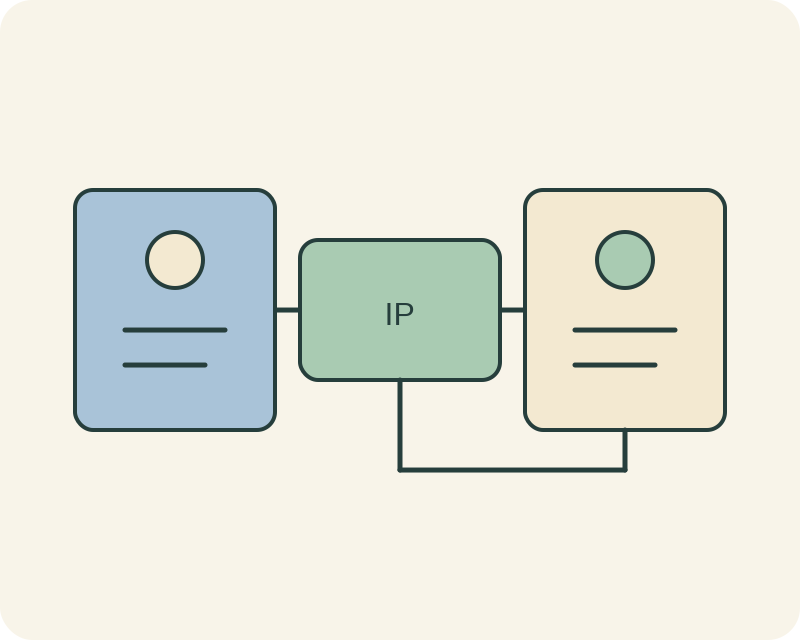
Connect a real request to a reliable IP and an official verification method. Keep that evidence separate from crawl permissions, indexing and search appearances.
Start with a specific request
Write down what you need to establish: for example, whether a request for a product page came from Googlebot. Retain the date and time zone, path, HTTP status and declared agent. Work on a copy without private parameters, credentials or customer identifiers. This proposed procedure does not include access to this site’s actual logs.
Check how your infrastructure identifies the original visitor. With a CDN or proxy, server logs may show an intermediary address. Confirm which field the service provides and which configuration makes it trustworthy; a header freely supplied by a visitor is insufficient.
Identify the claim being made
Google explains that a Googlebot agent can be impersonated. It also distinguishes common crawlers, special crawlers and user-triggered requests. Identify the relevant class before checking addresses; originating from Google infrastructure does not make every request a search crawler visit.
Record the exact agent alongside the class you intend to check. If you cannot establish it, retain a pending status and the unresolved question. Review another provider’s own documentation before applying a method to it.
Check DNS in both directions
Google’s manual method combines a reverse lookup of the IP, a check of the resulting domain and a forward lookup of that name that must return the starting IP. Consult its current table for your chosen class. Check the actual domain boundary: a name merely containing googlebot does not demonstrate ownership.
Save the queries, answers and time. If a lookup fails or does not match, record the precise result and first review the source IP. An incomplete check calls for further investigation; it does not automatically establish malicious activity.
When using ranges, check network membership
The official automated alternative compares the IP against published CIDR ranges for each class. Use the documentation’s current link and keep the date or a copy of the list consulted. Comparing text prefixes is different from checking membership in an IPv4 or IPv6 network.
For a small manual review, you can choose one method and document it. For thousands of automated checks, also define how lists are refreshed and how download or verification failures are handled.
An example record still awaiting verification
Fictional example: a shop observes a GET for /catalogo/cuaderno/ with status 200 and a Googlebot agent. Its export contains only the proxy IP. This record organizes the remaining work; it does not represent a verified visit or actual DNS output.
| Field | Status | Next step |
|---|---|---|
| Request | Path, time and 200 recorded | Keep a private reference |
| Visitor IP | Pending; only the proxy is visible | Consult the provider’s trusted field |
| Identity | Unverified | Apply an official method once the IP is available |
The owner can send this record to the log administrator without presenting 200 as proof of identity. Explaining the conclusion does not require publishing addresses.
Close with an accurate scope
Finish by stating which request you verified, how and when. Include missing information. An identity result alone does not reveal what content was processed or whether a page was indexed or cited.
For permissions, continue with the related robots.txt testing guide. For indexing, open the related diagnostic. Each question requires its own evidence.
Follow the evidence.
- Google Crawling Infrastructure · Verify requests from Google crawlers and fetchers ↗
- Google Search Central · Googlebot ↗
Sources checked October 31, 2026. Illustrative cases, people, codes and numbers are fictional. These are original editorial proposals and exercises, without claiming actual server-log analysis, store tests, sowing or customer results. Our editorial standards.