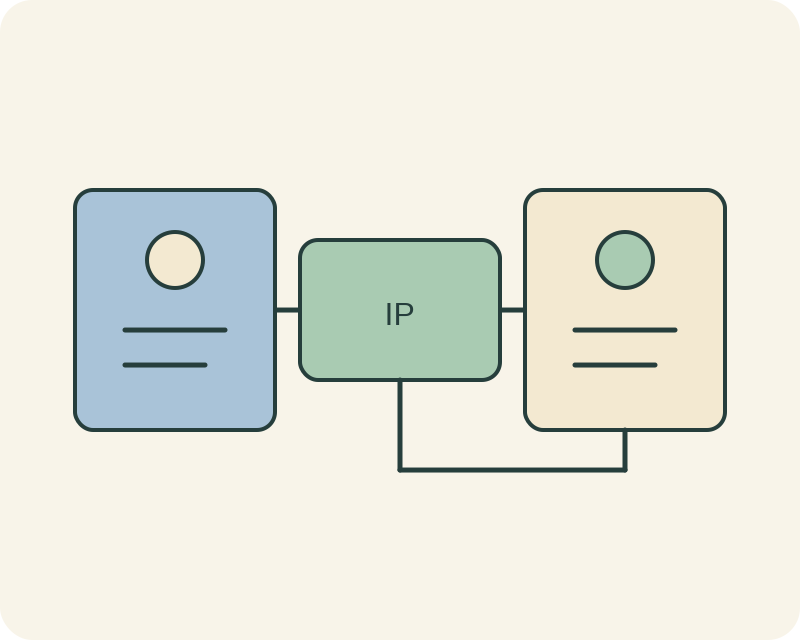
Vincula una solicitud real con una IP fiable y un método oficial de verificación. Distingue esa evidencia de los permisos de rastreo, la indexación y la aparición en resultados.
Empieza por una solicitud concreta
Escribe qué quieres aclarar: por ejemplo, si una solicitud a una ficha de producto procedía de Googlebot. Conserva fecha y zona horaria, ruta, código HTTP y agente declarado. Usa una copia de trabajo sin parámetros privados, credenciales o identificadores de clientes. El procedimiento propuesto aquí no incluye acceso a registros reales de este sitio.
Comprueba cómo tu infraestructura identifica al visitante original. Si hay una CDN o un proxy, el registro del servidor puede mostrar la IP del intermediario. Confirma qué campo proporciona el servicio y bajo qué configuración puedes confiar en él; una cabecera enviada libremente por el visitante no basta.
Identifica qué se está declarando
Google explica que un agente Googlebot puede ser imitado. Además, distingue rastreadores comunes, rastreadores especiales y solicitudes activadas por usuarios. Antes de contrastar direcciones, identifica la clase correspondiente; pertenecer a infraestructura de Google no convierte cualquier solicitud en una visita del rastreador de búsqueda.
Anota el agente exacto junto a la clase que vas a comprobar. Si no puedes establecerla, conserva el estado pendiente y la pregunta que falta resolver. No generalices este método a otros proveedores sin revisar su documentación.
Comprueba DNS en ambas direcciones
El método manual de Google combina una consulta inversa de la IP, la comprobación del dominio obtenido y una consulta directa de ese nombre que debe devolver la IP inicial. Consulta su tabla vigente para la clase elegida. Revisa el límite real del dominio: un nombre que solo contiene la palabra googlebot no demuestra pertenencia.
Guarda las consultas, sus respuestas y la hora. Si la consulta falla o no coincide, registra el resultado exacto y revisa primero la IP de origen. Una verificación incompleta merece una nueva comprobación; no la conviertas automáticamente en una acusación de actividad maliciosa.
Si usas rangos, comprueba pertenencia
La alternativa automatizada oficial compara la IP con los rangos CIDR publicados para cada clase. Utiliza el enlace actual de la documentación y conserva la fecha o copia de la lista consultada. Comparar prefijos de texto no equivale a comprobar pertenencia a una red IPv4 o IPv6.
Para una revisión manual pequeña puedes elegir un método y documentarlo. Si necesitas automatizar miles de solicitudes, define además cómo se actualizan las listas y qué ocurre cuando la descarga o la comprobación falla.
Ejemplo de una ficha todavía pendiente
Ejemplo ficticio: una tienda observa un GET a /catalogo/cuaderno/ con estado 200 y agente Googlebot. Su exportación contiene únicamente la IP del proxy. La ficha siguiente organiza el trabajo pendiente; no representa una visita comprobada ni una salida real de DNS.
| Dato | Estado | Siguiente paso |
|---|---|---|
| Solicitud | Ruta, hora y 200 registrados | Conservar referencia privada |
| IP del visitante | Pendiente; solo aparece el proxy | Consultar el campo fiable del proveedor |
| Identidad | Sin verificar | Aplicar un método oficial cuando haya IP |
La persona responsable puede entregar esta ficha a quien administra los registros sin presentar el 200 como prueba de identidad. No hace falta publicar las direcciones para explicar la conclusión.
Cierra con el alcance correcto
Cuando termines, escribe qué solicitud verificaste, con qué método y en qué momento. Añade los datos que faltan. Un resultado de identidad no informa por sí solo de qué contenido se procesó ni de si una página acabó indexada o citada.
Si el problema es un permiso, continúa con la guía de pruebas de robots.txt usando su enlace en relacionados. Para investigar indexación, abre el diagnóstico relacionado. Cada pregunta necesita su propia evidencia.
Was it Googlebot? Verify a request with logs, IP and DNS
The name Googlebot in a log is a lead worth checking. Investigating a visit requires a specific request, a reliable source address and an identity check you can reconstruct.
Connect a real request to a reliable IP and an official verification method. Keep that evidence separate from crawl permissions, indexing and search appearances.
Start with a specific request
Write down what you need to establish: for example, whether a request for a product page came from Googlebot. Retain the date and time zone, path, HTTP status and declared agent. Work on a copy without private parameters, credentials or customer identifiers. This proposed procedure does not include access to this site’s actual logs.
Check how your infrastructure identifies the original visitor. With a CDN or proxy, server logs may show an intermediary address. Confirm which field the service provides and which configuration makes it trustworthy; a header freely supplied by a visitor is insufficient.
Identify the claim being made
Google explains that a Googlebot agent can be impersonated. It also distinguishes common crawlers, special crawlers and user-triggered requests. Identify the relevant class before checking addresses; originating from Google infrastructure does not make every request a search crawler visit.
Record the exact agent alongside the class you intend to check. If you cannot establish it, retain a pending status and the unresolved question. Review another provider’s own documentation before applying a method to it.
Check DNS in both directions
Google’s manual method combines a reverse lookup of the IP, a check of the resulting domain and a forward lookup of that name that must return the starting IP. Consult its current table for your chosen class. Check the actual domain boundary: a name merely containing googlebot does not demonstrate ownership.
Save the queries, answers and time. If a lookup fails or does not match, record the precise result and first review the source IP. An incomplete check calls for further investigation; it does not automatically establish malicious activity.
When using ranges, check network membership
The official automated alternative compares the IP against published CIDR ranges for each class. Use the documentation’s current link and keep the date or a copy of the list consulted. Comparing text prefixes is different from checking membership in an IPv4 or IPv6 network.
For a small manual review, you can choose one method and document it. For thousands of automated checks, also define how lists are refreshed and how download or verification failures are handled.
An example record still awaiting verification
Fictional example: a shop observes a GET for /catalogo/cuaderno/ with status 200 and a Googlebot agent. Its export contains only the proxy IP. This record organizes the remaining work; it does not represent a verified visit or actual DNS output.
| Field | Status | Next step |
|---|---|---|
| Request | Path, time and 200 recorded | Keep a private reference |
| Visitor IP | Pending; only the proxy is visible | Consult the provider’s trusted field |
| Identity | Unverified | Apply an official method once the IP is available |
The owner can send this record to the log administrator without presenting 200 as proof of identity. Explaining the conclusion does not require publishing addresses.
Close with an accurate scope
Finish by stating which request you verified, how and when. Include missing information. An identity result alone does not reveal what content was processed or whether a page was indexed or cited.
For permissions, continue with the related robots.txt testing guide. For indexing, open the related diagnostic. Each question requires its own evidence.
真的是 Googlebot 吗?用日志、IP 与 DNS 核实请求
日志中的 Googlebot 名称是一条待核实的线索。调查一次访问,需要具体请求、可信的来源地址,以及能够复查的身份核验过程。
把真实请求、可信 IP 和官方核验方法连接起来。身份记录、抓取权限、索引收录与搜索展示需要分别判断。
从一条具体请求开始
先写清要确认什么,例如某次产品页面请求是否来自 Googlebot。保留日期、时区、路径、HTTP 状态和声明的代理名称。使用去除私密参数、凭证和客户标识的工作副本。本文提出操作流程,没有访问本站真实日志。
确认基础设施如何识别原始访问者。使用 CDN 或代理时,服务器日志可能显示中间节点的 IP。查清服务提供哪个字段、何种配置下该字段可信;访问者能自行填写的请求头不足以作为依据。
明确正在核对的身份声明
Google 说明,Googlebot 代理名称可能被冒用,并区分常见抓取器、特殊抓取器和用户触发的请求。核对地址前应确定对应类别;来自 Google 基础设施的请求,并不都属于搜索抓取器访问。
把完整代理名称与待核验类别一同记录。无法确定时,保留待处理状态及缺少的信息。其他提供商需要另查其官方说明,不能直接套用规则。
进行双向 DNS 核对
Google 的人工方法包括反向查询 IP、核对返回的域名,再正向查询该名称,确认能返回最初的 IP。请按当前文档表格核对相应类别。检查真实域名边界,名称中仅含 googlebot 字样不能证明归属。
保留查询、响应和时间。查询失败或不匹配时,记录具体结果,先复查来源 IP。未完成的核验应继续调查,不能直接认定为恶意访问。
使用地址段时核对网络归属
官方自动核验方法,是把 IP 与相应类别公布的 CIDR 地址段进行比较。使用当前文档中的链接,保留查询日期或名单副本。字符串前缀比较不能替代 IPv4 或 IPv6 网络归属判断。
少量人工复查可以选择一种方法并留档。若要自动检查大量请求,还需明确名单更新方式,以及下载或核验失败时如何处理。
一份仍在等待核验的记录
虚构示例:商店发现一次对 /catalogo/cuaderno/ 的 GET 请求,状态为 200,代理声称是 Googlebot。导出文件只有代理服务器 IP。下表整理后续工作,不代表已核实的访问,也不是真实 DNS 输出。
| 字段 | 状态 | 下一步 |
|---|---|---|
| 请求 | 已记录路径、时间和 200 | 保存私密参考记录 |
| 访问者 IP | 待确认;仅有代理 IP | 查阅服务商的可信字段 |
| 身份 | 未核实 | 获得 IP 后应用官方方法 |
负责人可以把记录交给日志管理员,同时避免把 200 当作身份依据。解释结论不需要公开地址。
准确说明最终证据范围
结束时写明核验了哪次请求、方法和时间,并列出缺少的信息。仅凭身份核验,无法得知处理了哪些内容,也无法证明页面已被收录或引用。
若问题涉及权限,继续阅读相关的 robots.txt 测试指南;若涉及索引,打开相关诊断指南。每个问题都需要自己的证据。
Fuentes y método
- Google Crawling Infrastructure · Verify requests from Google crawlers and fetchers ↗
- Google Search Central · Googlebot ↗
Fuentes consultadas el 31 de octubre de 2026. Los casos, personas, códigos y cifras ilustrativos son ficticios. Son propuestas y ejercicios editoriales originales, sin atribuir registros de servidor, pruebas de tiendas, siembras ni resultados de clientes realizados. Editorial standards · Disclosures.