Set the unit, allocation and outcome before starting. Retain counts by group, check measurement integrity and declare when observation ends.
Choose a narrow decision
Imagine a course page inviting visitors to check schedules. The team wants to know whether more specific wording helps people reach that action. Write two versions and keep the rest of the page fixed within the test. Define what decision clear evidence could support and what to do if evidence remains insufficient.
UK government guidance presents A/B as a design comparison with randomized allocation. A primary difference helps connect the outcome to the change you set out to study.
Decide what receives a version
Assignment can be by eligible visitor when there is a suitable way to retain their group. If someone returns, keep their variant under the chosen rule. Reassigning each visit would answer a different question and could expose a person to both versions.
Record the eligible population and assignment moment. Plan how to record repeated units, missing entries and cases where the assigned version was not served. Request only the information needed for that check.
Define when an outcome counts
In the fictional case, the outcome is a valid schedule inquiry within a defined window. Decide which action establishes it and how to count each successful unit once. The example denominator includes assigned eligible visitors.
If one version records the event on opening the page and the other after completing the action, their rates mean different things. Walk through both paths with test data before admitting traffic.
Read counts alongside rates
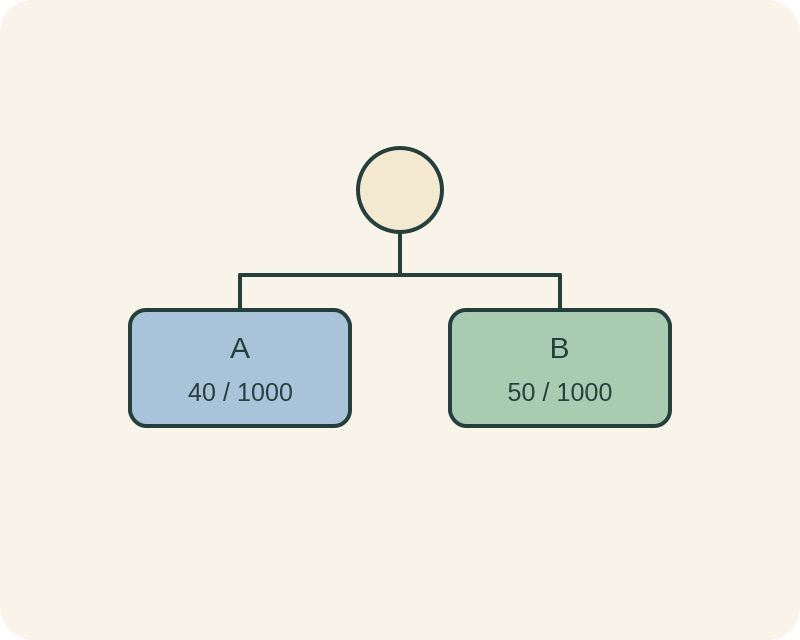
The table is an invented arithmetic example. Each rate divides outcomes by assigned units in its group.
| Version | Assigned | Outcomes | Rate |
|---|---|---|---|
| A | 1,000 | 40 | 4% |
| B | 1,000 | 50 | 5% |
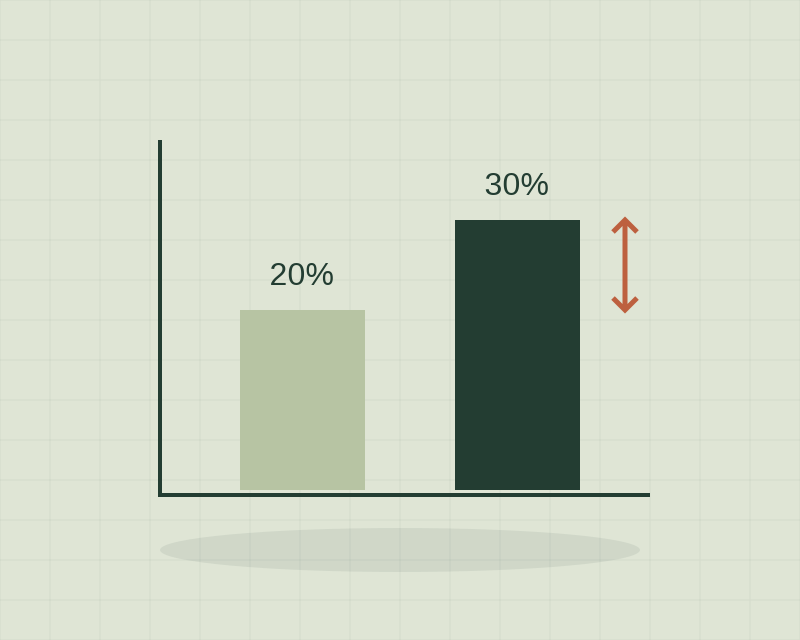
The observed difference in these figures is one percentage point. A real decision needs an analysis rule, a planned duration and an assessment of uncertainty appropriate to the design.
Investigate unexpected allocation
Compare observed counts with planned allocation. Microsoft Research documents sample ratio mismatch as a signal to investigate experiment problems. Inspect logging, eligibility and variant delivery when allocation is inconsistent with what the design predicts.
Keep missing rows and their stage visible. An imbalance may originate in measurement or delivery. Retain the data version and diagnosis so someone else can reconstruct the review.
Write the decision beside the design
Keep question, wording, unit, planned proportions, event, end date and analysis rule. At closure state the scope of the conclusion and unresolved questions. Setting the rule early reduces the temptation to stop at the first attractive number.
The survey guide reviews how people understand a question. This exercise prepares a comparison of behavior after controlled assignment to versions.
Follow the evidence.
- UK Government · A/B testing comparative studies ↗
- Microsoft Research · Diagnosing sample ratio mismatch ↗
Sources checked November 3, 2026. Illustrative scenarios and numbers are fictional. Original exercises and records, without attributed customer results or field observations. Our editorial standards.