Choose one shared first task, check its conditions and assign outstanding work. Welcome, readiness and use of a delivery are different states.
Recover the actual accepted agreement
Gather version, scope, participants and starting conditions. Do not use the welcome to add unagreed work. If seller and coordinator differ, transfer questions and limits alongside deliverables.
HubSpot describes onboarding as the journey after purchase or registration that helps people begin using a service. Our example concentrates on first-step readiness. We do not treat that guide as evidence that a welcome message causes retention.
Choose a task involving both parties
A fictional studio will prepare an association’s first bulletin from supplied text. The first step is opening and commenting on a test draft. The agreed delivery is an editable document, rather than email sending or platform configuration.
That requires approved copy, an identified template and an authorized customer reviewer. Before scheduling a meeting, ask whether these conditions exist. “We have access” does not identify the file, version or permission.
Build a shared readiness record
| Condition | Proposed owner | Check |
|---|---|---|
| Input text | Association | Identifies the approved version |
| Template | Studio | Opens the reference file |
| Reviewer | Association | Confirms who can comment and decide |
| Draft access | Both parties | Reviewer can open it |
| Next step | Both parties | Agree review and pending work |
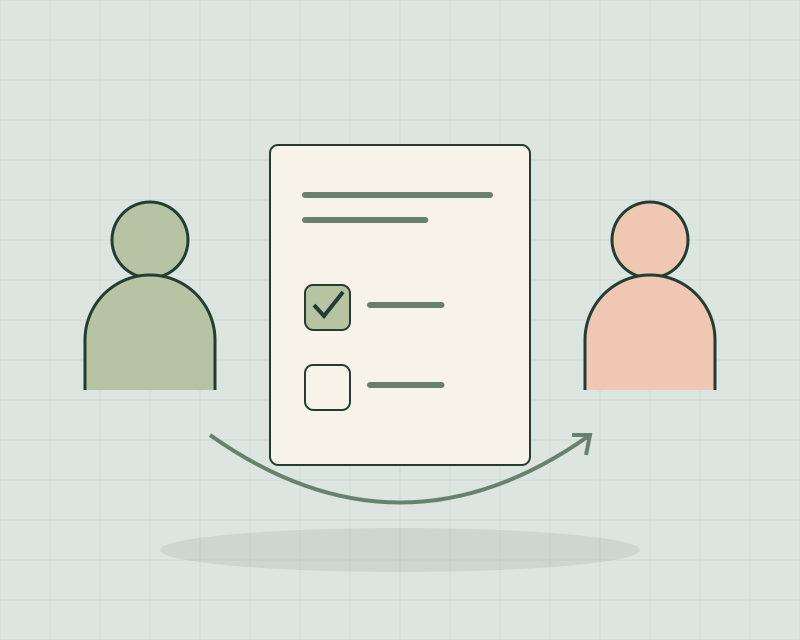
Owners belong to the scenario; real responsibilities require agreement. Keep unresolved conditions visible alongside the dependent action. A completed box means that check occurred, rather than the whole project being ready.
Write an actionable welcome
An original message might say: “To prepare the first draft, we need the approved text and confirmation of its reviewer. The agreed template is in this folder. Once both inputs are checked, we will confirm the review.” Replace folder and commitments with real references before sending.
If a conversation helps, use it to resolve decisions and try access. There is no need to tour every tool feature. Retain the explanation that lets an absent participant continue.
Check the first action without advancing the outcome
In an authorized trial, ask the reviewer to open the test draft and find where to comment. If unsuccessful, record the obstacle before producing more work dependent on that access. Avoid shared passwords as a shortcut.
Our first delegation guide organizes internal assignment and production. Here we coordinate the customer’s entry into service. Opening a draft establishes access to that file, rather than regular adoption or a communication outcome.
Leave a start someone else can continue
- Current agreement and selected first task.
- Checked inputs and required references.
- Production, review and decision owners.
- Pending conditions, affected dependency and next action.
- Condition for confirming the next milestone.
A requirements matrix helps before an offer; a change record addresses later modifications. This record covers the space between acceptance and operational readiness, without turning a desired date into a confirmed commitment.
Follow the evidence.
Sources checked October 25, 2026. Illustrative scenarios and numbers are fictional. The records and exercises are original editorial proposals, without attributed customer results or provider tests. Our editorial standards.