Give the photo a stable identifier, keep clues with their origins and record uncertainty as part of the description.
Start with a single photograph
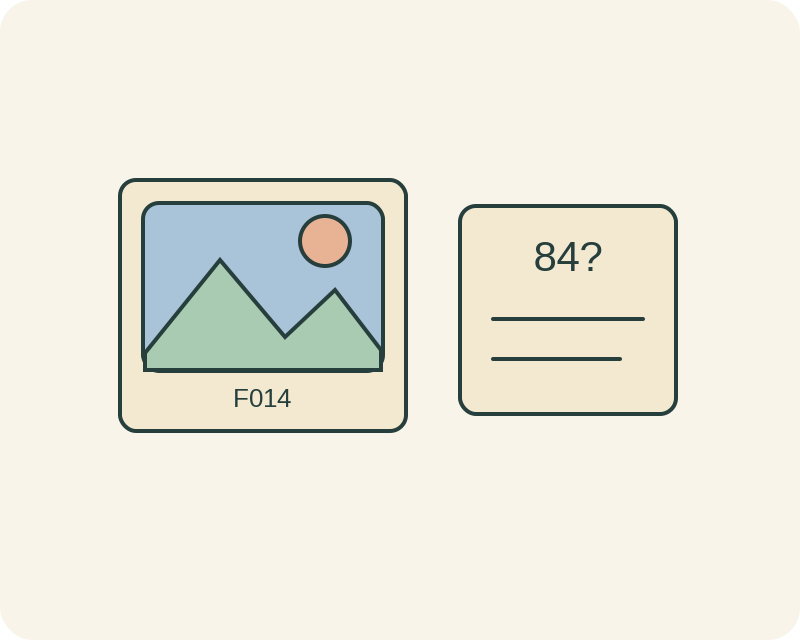
Choose a photo and assign an ID such as F014. Use it for the digital image and record. If there is a note on the back, transcribe it separately or keep an identified copy of the reverse.
The Library of Congress recommends descriptive names and information about people and subjects. The National Archives recommends retaining originals after digitizing. The record can stay beside the digital copy.
Separate visible details from memories
| Origin | Recorded detail | State |
|---|---|---|
| Photo front | Three people before a Salón Norte sign | Visible in the image |
| Note on reverse | 84? in pencil | Readable inscription with doubt |
| Family memory | Possibly an end-of-term meal | Interpretation pending |
The table contains fictional practice details. Copy the inscription’s question mark. Record who supplied a memory and when, including their stated confidence.
Distinguish capture date and copy date
Record estimated scene date and scanning date separately. The file can be F014-front.jpg while the record keeps capture date unknown. This permits corrections without changing every reference.
A recently created file can contain a much older scene. Keep each value with its date type.
Ask a question that could clarify a clue
Show an authorized copy. Ask what someone recognizes about the sign or who used to organize those gatherings. Date their response and retain differing accounts.
Start with an open question. When someone suggests a place or year, ask which detail prompted it.
Add evidence while retaining the record
If you find a dated program showing the same room, record its location and what it supports. Check whether it identifies the event or only the building. Keep the earlier description as a dated entry.
If an identity is unresolved, retain that person’s position, such as left or center, so a later response can refer to the same detail.
Keep the record where you can return to it
Use the same ID for the note, copy and reference to the original. Decide who can see personal details and prepare a less detailed copy if sharing. A good record can remain open with a specific question.
Follow the evidence.
- Library of Congress · Keeping personal digital photographs ↗
- US National Archives · Digitizing family papers and photographs ↗
Sources checked November 7, 2026. Illustrative scenarios and numbers are fictional. Original exercises and records, without attributed customer results or field observations. Our editorial standards.