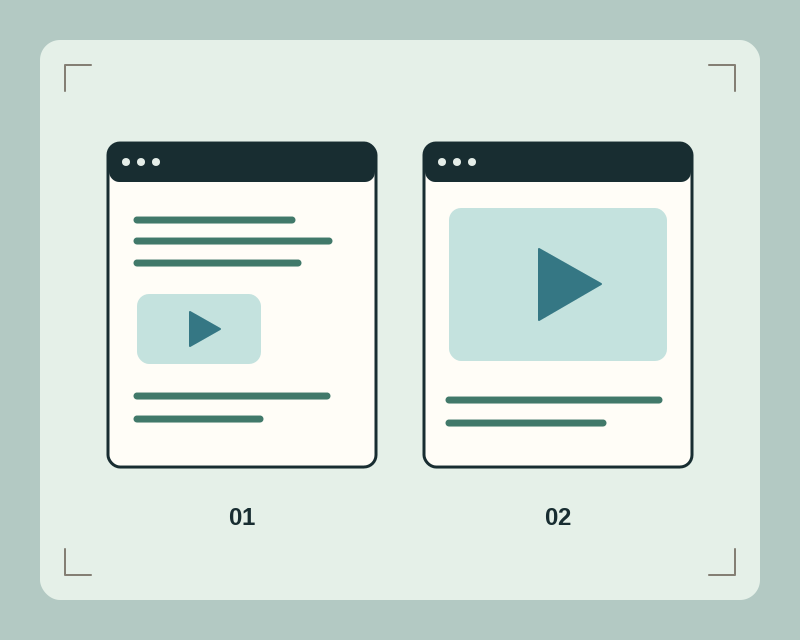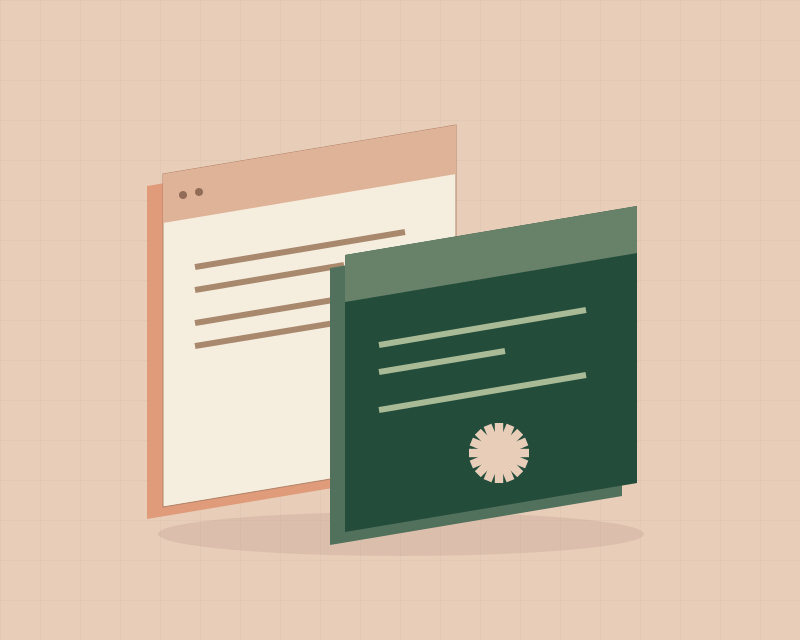
Compare the information that helps readers decide on each version. Check what is in the mobile document before interaction and what loads afterward.
Choose a task and the facts it requires
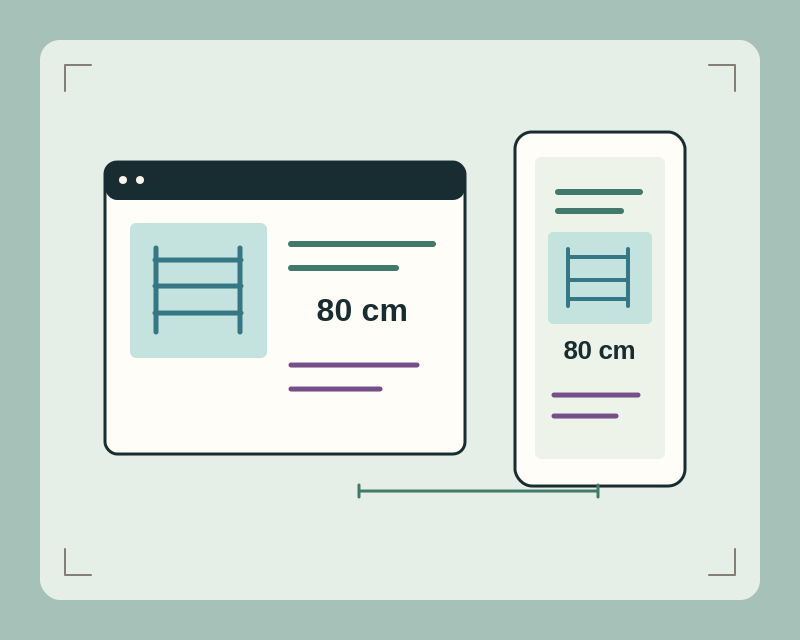
Imagine someone wants to know whether the shelf fits an 85 cm opening. List its dimensions, the installation condition and the assembly link. Use that list to read both versions. Google documents that it uses mobile content for indexing and recommends equivalent primary content, including headings that help readers understand it.
Distinguish three behaviors on arrival
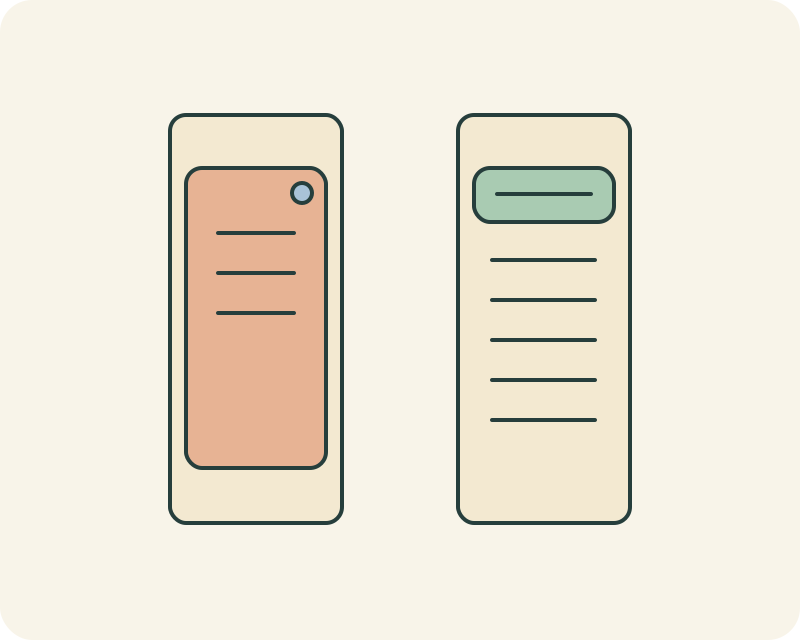
In the first mock-up, the accordion is closed and the dimensions are already in the document. A reader can expand it when needed. In the second, pressing the button sends a request and inserts the text for the first time. In the third, the mobile view omits the entire section. All three look short on arrival, but they deliver information in different ways.
Google recommends making primary content available without an interaction that has to load it. For this product page, try the first behavior and verify that the accordion opens by keyboard and touch.
Review the rendered document
Load the address in a clean session on desktop and at mobile width. Before interacting, search the DOM for a precise phrase, such as “80 cm wide.” In a JavaScript application, the initial HTML and the rendered document can differ. If you have access to URL Inspection, the live test lets you review the HTML Google obtained in that test.
Compare the supporting information
Record which link opens the assembly guide and which image communicates a measurement or condition. Check that the links and alternatives for informative images carry over. If there are separate templates, compare titles and robots directives too. Keep the results alongside the version that served them.
Record a case you can repeat
Keep the date, URL, fact you looked for and outcome before and after interacting. In the example, the change is complete when the dimensions and link are available on mobile at load and the accordion still works. Repeat the same check after publication and record search observations separately.
Follow the evidence.
Sources checked November 12, 2026. The exercise scenarios and figures are fictional. Our editorial standards.