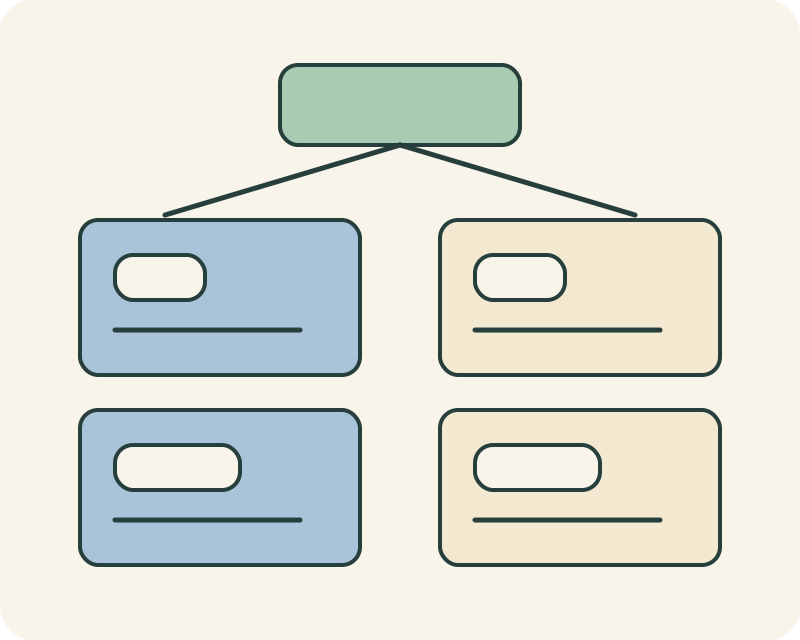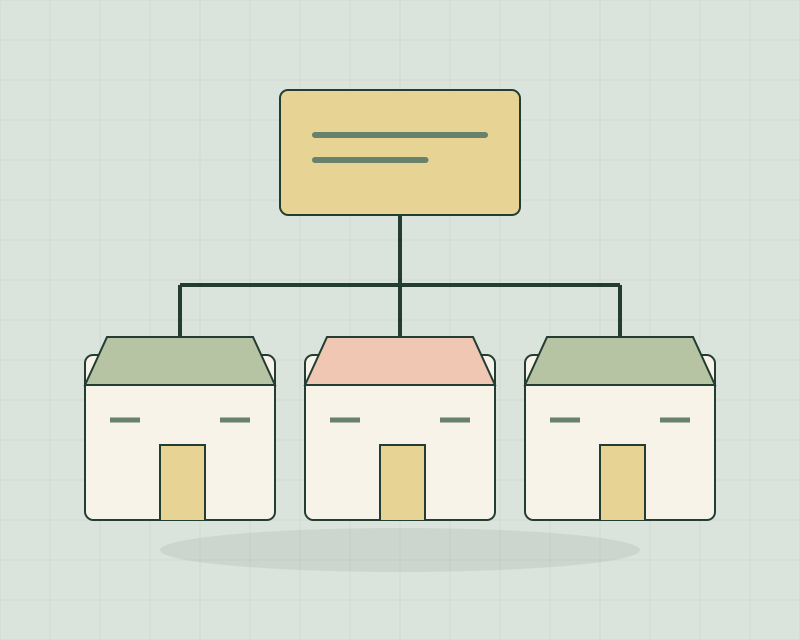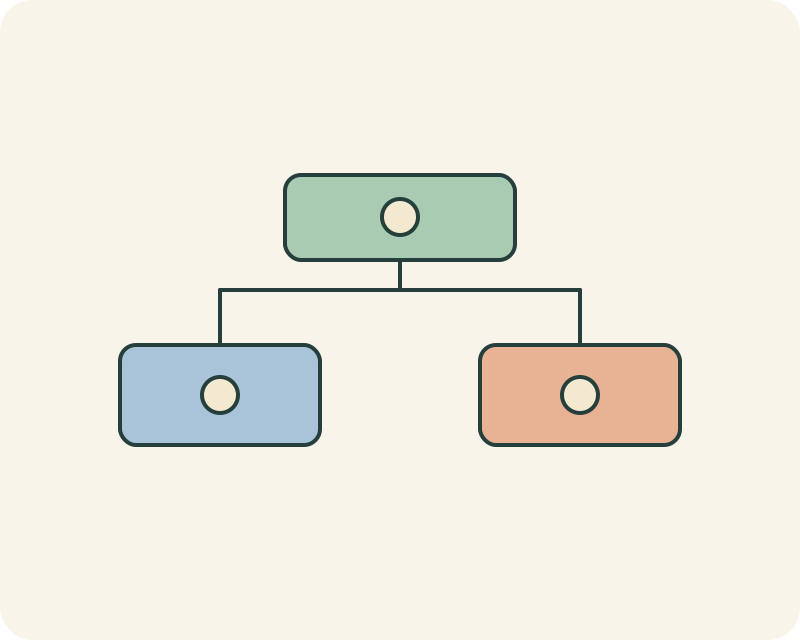
Map names, offers and their visible relationship. Decide what the audience should understand and check that reading before turning the scheme into new materials.
Define the confusion to resolve
Start with a concrete situation: someone finds a class and does not know whether the workshop making the objects also organizes it. The question is which relationship needs explaining, rather than how many logos fit a presentation. Retain current names and observed questions, separating them from hypotheses.
Qualtrics presents architecture as a structure relating a master brand, sub-brands, products and lines. We use that concept to organize names without claiming research into how actual customers perceive a real company.
Distinguish the name from its function
In this exercise, a master brand identifies a collection; a line describes part of its offer; an endorsement makes a relationship between identities visible. NIQ distinguishes master-brand, portfolio and endorsed models. These are discussion references, not a ranking of better and worse businesses.
A new name does not automatically require an independent identity. Nor does a shared word prove that services share the same operation. Write what each level means in the case under review.
Try a fictional workshop map
Fictional example: Bruma makes objects and offers classes. Its team explores a shared brand with two descriptive lines. The table organizes one alternative for discussion; it represents neither a real company, trademark registration nor an approved decision.
| Name | Proposed function | What it should clarify |
|---|---|---|
| Bruma | Master brand | The collection presenting the offer |
| Bruma Objetos | Product line | What can be purchased |
| Bruma Aula | Learning line | What can be learned |
The map does not turn every object color or size into another brand. The related variant guide retains catalog identity; here the task concerns relationships names communicate to the audience.
Compare another relationship before designing it
The team could also explore independent names accompanied by a Bruma endorsement. That changes which name comes first and which connection needs explaining. Write what improves, what becomes less clear and the work each identity would require to maintain.
Do not infer recognition, trust or sales from a diagram’s shape. Where evidence of audience understanding is missing, retain the question. An attractive architecture on paper can still be confusing on a page.
Ask for a concrete reading of the scheme
Prepare a simple sample with names, descriptions and the proposed connection. Ask someone to explain who offers the class and how it relates to the objects. Asking only whether they like it tests preference, not necessarily understanding of the relationship.
Record their words and what they consulted to answer. This is a proposed test, not a completed study. If someone interprets a collaboration where you intended an owned line, revisit the message before producing full applications.
Leave an understandable usage rule
Summarize which name leads each page, where the relationship is explained and who reviews new names. Retain accepted examples and unresolved cases. You need not settle the whole portfolio to clarify one piece, but avoid contradictory decisions across channels.
Positioning defines the promise and its audience; architecture organizes relationships between offers and identities. Reviewing both supports better questions without presenting a name change as an established commercial outcome.
Follow the evidence.
Sources checked November 1, 2026. Illustrative scenarios and numbers are fictional. The records and exercises are original editorial proposals, without attributed customer results or provider tests. Our editorial standards.