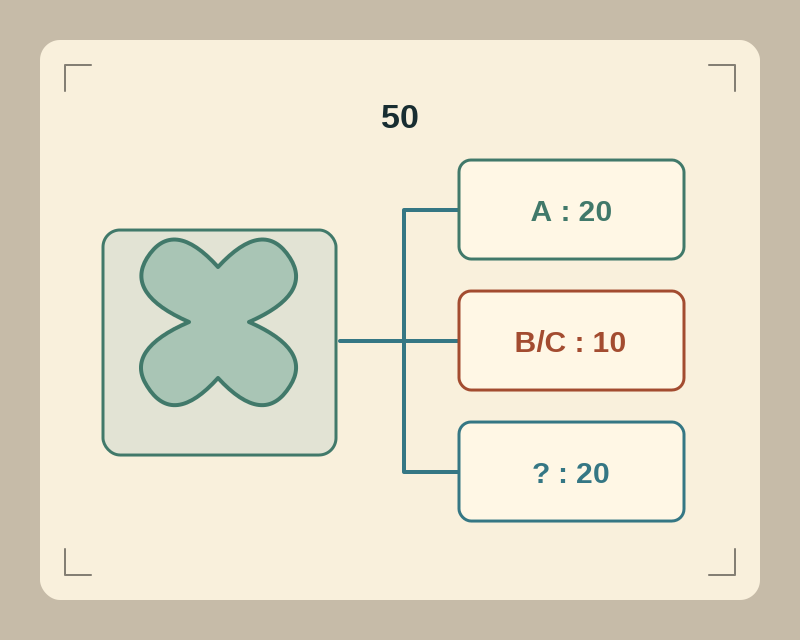
Choose one sign and ask which brand, if any, comes to mind. Keep the original answer before grouping it.
Define what you will show
It might be a shape, color combination or approved character belonging to fictional brand A. Remove the visible name for this exercise and preserve the sample's size, background and exposure time. Changing several things across versions makes it harder to establish which stimulus each person received.
Ask about association before revealing
A proposed question is “Which brand, if any, comes to mind when you see this sign?” Allow none or don't know. Do not first display a list containing the expected answer or reveal brand A before collecting the response. Keep any later liking question separate.
Organize a constructed result
In a fictional sample of fifty unique responses, twenty name A, ten name other brands and twenty associate none or don't know. Retain those last two expressions separately in the data, even though they are grouped here for a summary. Forty percent named A in this sample. This is neither an observed result nor an estimate for the whole market.
Inspect incorrect attributions too
The Ehrenberg-Bass Institute explains that distinctive assets need clear and unique links to a brand. The ten responses naming another brand therefore matter alongside those naming A. People can like a sign and associate it with a competitor; visual preference does not resolve that attribution.
Decide the next question
Keep stimulus, question, order, audience and responses. If the sign is confused with another brand, review context and consistent use before commissioning an intuitive redesign. This exercise organizes a recognition review; conclusions about a population require appropriate research design and sampling.
Follow the evidence.
Sources checked November 21, 2026. The exercise scenarios and figures are fictional. Our editorial standards.