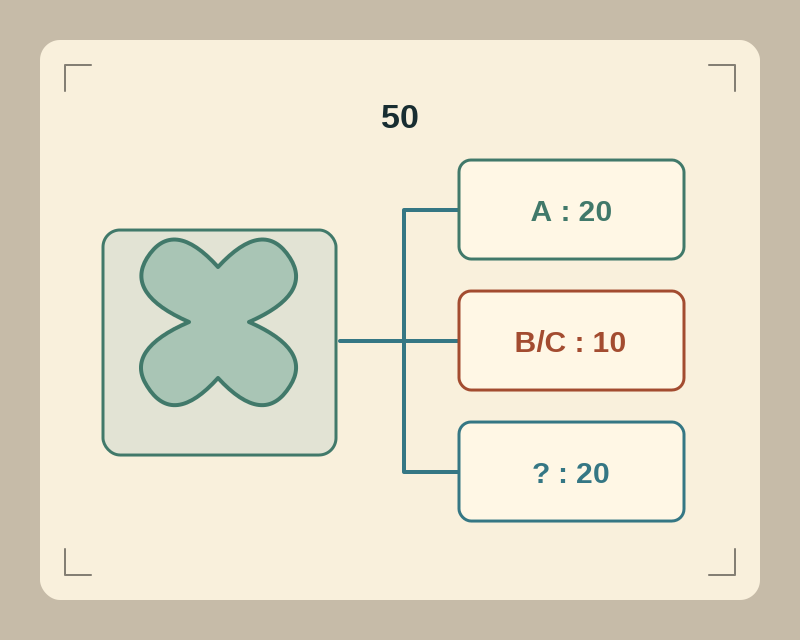
Elige un solo signo y pregunta qué marca, si alguna, viene a la mente. Conserva la respuesta original antes de agruparla.
Define qué vas a mostrar
Puede ser una forma, una combinación de colores o un personaje autorizado de la marca ficticia A. Quita el nombre visible para este ejercicio y conserva el tamaño, fondo y duración de exposición de la muestra. Si cambias varias cosas entre versiones, será más difícil saber qué estímulo recibió cada persona.
Pregunta por la asociación antes de revelar
Una pregunta propuesta es «¿Qué marca, si alguna, te viene a la mente al ver este signo?». Permite decir ninguna o no saber. No muestres primero una lista que incluya la respuesta esperada ni reveles la marca A antes de recoger esa respuesta. Guarda por separado cualquier pregunta posterior sobre agrado.
Ordena un resultado construido
En una muestra ficticia de cincuenta respuestas únicas, veinte nombran A, diez nombran otras marcas y veinte no asocian ninguna o no saben. Registra esas dos últimas expresiones por separado en los datos, aunque aquí se agrupen para resumir. El 40 % nombró A en esta muestra. No es un resultado observado ni una estimación de todo el mercado.
Mira también las atribuciones equivocadas
El Ehrenberg-Bass Institute explica que los activos distintivos necesitan estar vinculados clara y singularmente a la marca. Por eso importa que diez respuestas nombren otra marca, además de cuántas nombran A. Un signo puede gustar y recordar a un competidor; la preferencia visual no resuelve esa asociación.
Decide qué pregunta sigue
Conserva estímulo, pregunta, orden, público y respuestas. Si el signo se confunde con otra marca, revisa el contexto y su uso consistente antes de encargar un rediseño por intuición. Este ensayo organiza una revisión de reconocimiento; para concluir sobre una población necesitas un diseño de investigación y una muestra apropiados.
A sign without the name: check which brand comes to mind
A fictional team preparing a new piece asks whether people like its symbol. Answers may inform a design discussion, but still do not establish which brand people attribute it to. Studying that relationship requires observing the association it evokes.
Choose one sign and ask which brand, if any, comes to mind. Keep the original answer before grouping it.
Define what you will show
It might be a shape, color combination or approved character belonging to fictional brand A. Remove the visible name for this exercise and preserve the sample's size, background and exposure time. Changing several things across versions makes it harder to establish which stimulus each person received.
Ask about association before revealing
A proposed question is “Which brand, if any, comes to mind when you see this sign?” Allow none or don't know. Do not first display a list containing the expected answer or reveal brand A before collecting the response. Keep any later liking question separate.
Organize a constructed result
In a fictional sample of fifty unique responses, twenty name A, ten name other brands and twenty associate none or don't know. Retain those last two expressions separately in the data, even though they are grouped here for a summary. Forty percent named A in this sample. This is neither an observed result nor an estimate for the whole market.
Inspect incorrect attributions too
The Ehrenberg-Bass Institute explains that distinctive assets need clear and unique links to a brand. The ten responses naming another brand therefore matter alongside those naming A. People can like a sign and associate it with a competitor; visual preference does not resolve that attribution.
Decide the next question
Keep stimulus, question, order, audience and responses. If the sign is confused with another brand, review context and consistent use before commissioning an intuitive redesign. This exercise organizes a recognition review; conclusions about a population require appropriate research design and sampling.
去掉品牌名称的标志:检查人们想到哪个品牌
虚构团队制作新宣传材料,询问人们是否喜欢它的图形。回答能帮助设计讨论,却还不能说明人们把图形归给哪个品牌。研究这层关系,需要观察它唤起的联想。
只选一个标志,询问看到它会想到哪个品牌,并允许没有联想。分类前保留原始回答。
定义展示的内容
可以使用虚构品牌 A 已获准的形状、配色或角色。本练习去掉可见品牌名,保留样本尺寸、背景和展示时长。不同版本同时改变多项内容,会更难确定每人看到的刺激材料。
揭示答案前询问联想
可提问:“看到这个标志,你会想到哪个品牌?如果没有,也可以说明。”允许回答没有或不知道。收集回答前,不先展示包含预期答案的名单,也不揭示品牌 A。后续关于喜欢程度的问题另行保存。
整理构造的结果
在五十个独立回答的虚构样本中,二十个提到 A,十个提到其他品牌,二十个没有联想或不知道。原始数据中仍分别保留后两种表达,尽管摘要暂将它们合并。本样本的 40% 提到 A。这不是实际观察结果,也不是整个市场的估计。
同时检查错误归属
Ehrenberg-Bass Institute 说明,独特品牌资产需要与品牌建立清晰且唯一的关联。因此,除提到 A 的数量外,十个指向其他品牌的回答也很重要。一个标志可能讨人喜欢,却让人想到竞争者;视觉偏好不能解决归属问题。
决定下一步问题
保存刺激材料、提问、顺序、受众和回答。标志若与其他品牌混淆,先检查使用背景及一致性,再决定是否凭直觉委托重设计。这个练习用于整理识别检查;要对总体下结论,还需要适当的研究设计和抽样。
Fuentes y método
Fuentes consultadas el 21 de noviembre de 2026. Los casos y datos numéricos de los ejercicios son ficticios. Editorial standards · Disclosures.