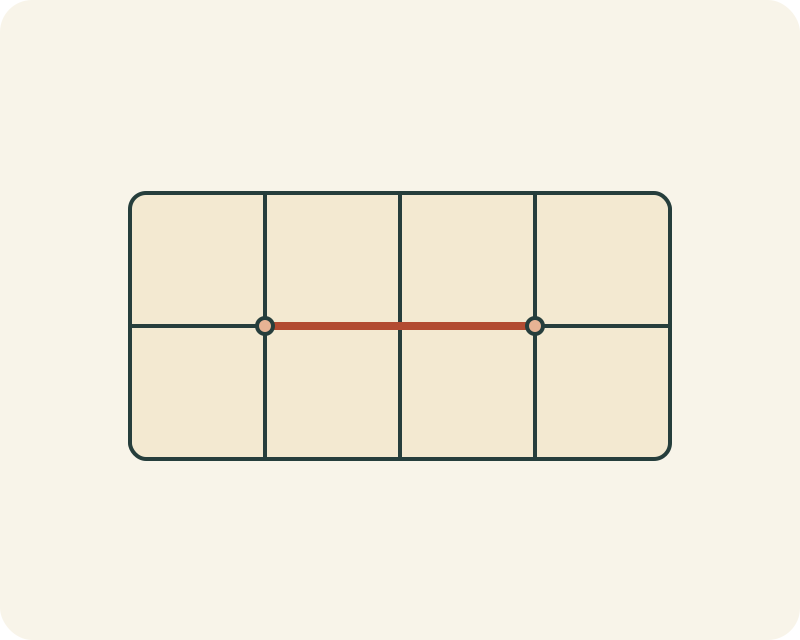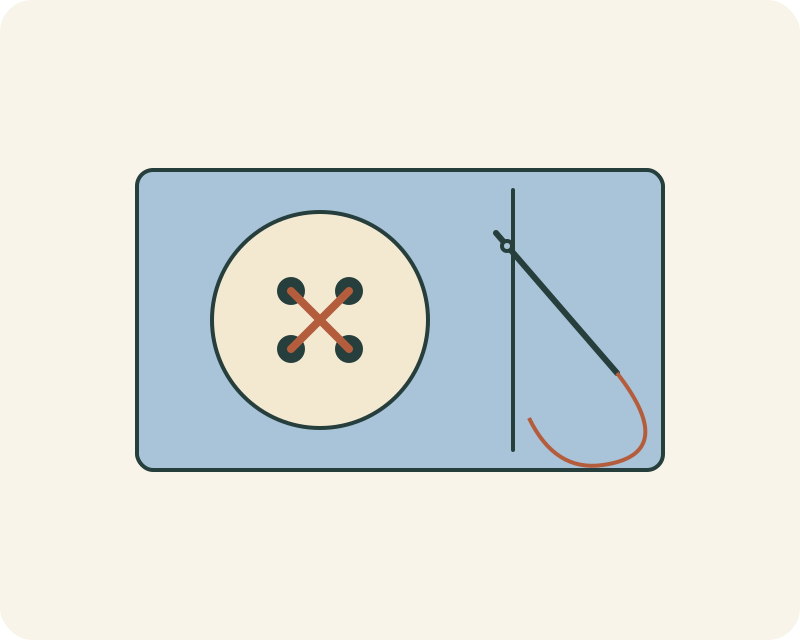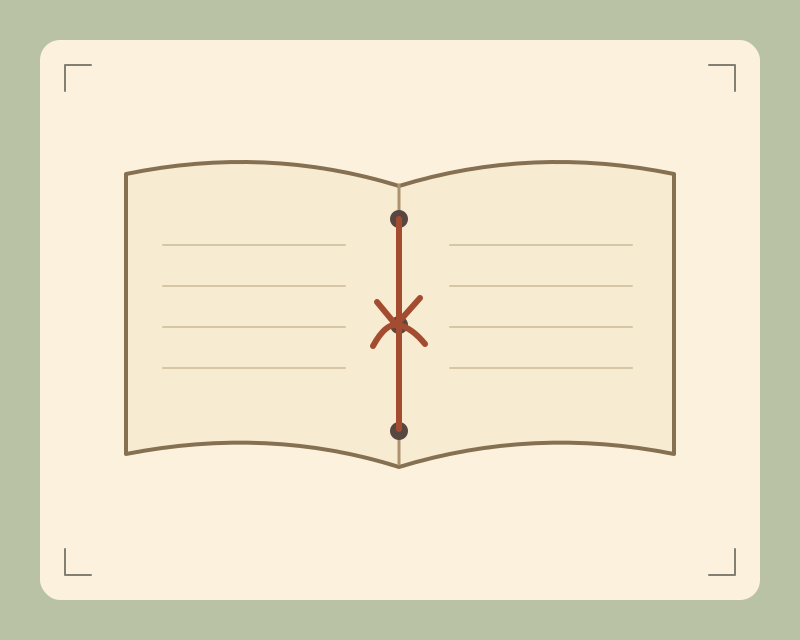
Marca tres agujeros en el doblez, vuelve al centro y ata los cabos a ambos lados de la hebra larga. Ajusta el hilo hasta apoyar el papel sin arrugarlo.
Dobla y reúne las hojas
Usa tres hojas del mismo tamaño, una cubierta ligera, hilo firme, aguja, tijeras y una base de cartón grueso. Dobla cada hoja por separado y coloca una dentro de otra. Pon la cubierta por fuera. Si empiezas con hojas A5, el cuaderno cerrado tendrá aproximadamente la mitad de su ancho y la misma altura cuando el pliegue sea vertical.
Marca las tres posiciones
Haz una marca en el centro del pliegue. Marca otras dos a 3 cm por arriba y por abajo del centro. Sujeta las hojas con pinzas y apoya el doblez en cartón grueso para abrir los agujeros. Después de perforar, usa una aguja de punta roma que pase por las aberturas.
Recorre el centro y los extremos
Corta hilo de unas tres veces la longitud del lomo. Pasa del centro interior hacia afuera y deja un cabo suelto. Entra por el agujero superior. Por dentro, lleva la aguja hasta el agujero inferior, saltando el centro, y sal por ahí. Entra de nuevo por el agujero central.
Ajusta antes de atar
Deja uno de los cabos a cada lado de la hebra que recorre el interior. Tira con suavidad en la dirección del pliegue y ata los dos cabos sobre la hebra larga. Así el nudo la sujeta. Si el papel se arquea, afloja un poco antes de recortar.
Abre por varias páginas
Abre por el centro y por una página cercana a la cubierta. Si una hoja se mueve, comprueba que pasaste por ella en las tres perforaciones. Anota cuánto hilo sobró y qué grosor de cubierta te dejó abrir el cuaderno cómodamente.
A small notebook sewn through the fold with three holes
Three sheets folded in half and a light cover are enough for a pocket notebook. Sewing through the center lets one thread hold every sheet and leaves the knot inside. The first test is to open it fully and see what happens at the fold.
Mark three holes in the fold, return to the center and tie the ends on opposite sides of the long strand. Adjust the thread until it rests against the paper without puckering it.
Fold and gather the sheets
Use three sheets of the same size, a light cover, sturdy thread, a needle, scissors and a thick cardboard backing. Fold each sheet separately and nest the sheets. Place the cover outside. If you start with A5 sheets, the closed notebook will be about half as wide and the same height when the fold is vertical.
Mark the three positions
Mark the middle of the fold. Mark another spot 3 cm above and another 3 cm below the center. Clip the sheets together and rest the fold on thick cardboard to make the holes. Once punched, work with a blunt needle that fits through the openings.
Travel through the center and ends
Cut thread about three times the length of the spine. Go from the inside out through the center, leaving a loose tail. Go in through the top hole. Along the inside, carry the needle to the bottom hole, skipping the center, and exit there. Go back in through the center hole.
Adjust the thread before tying
Leave one tail on each side of the strand running along the inside. Pull gently along the fold and tie the ends over the long strand so the knot holds it. If the paper buckles, loosen the thread a little before trimming.
Open to several pages
Open to the middle and to a page near the cover. If one sheet shifts, check that the thread passed through all three of its holes. Note how much thread was left and what cover thickness let the notebook open comfortably.
用三个孔沿折痕缝一本小本子
三张对折的纸加一张薄封面,就能做一本口袋本。沿中间折痕缝,一根线能固定各张纸,结也会留在本子里面。做完先把本子完全打开,看看折痕处有什么变化。
在折痕上标出三个孔,穿回中间,让线头分居长线两侧再打结。把线调到贴着纸、又不会使纸起皱的程度。
把纸对折套在一起
准备三张同样大小的纸、薄封面、结实的线、针、剪刀和厚纸板垫。每张纸分别折好,再逐张套入,封面放最外侧。如果用 A5 纸并把折痕竖放,合上的本子宽度约为原来一半,高度不变。
标记三个位置
在折痕中点做记号,再在上、下各相距 3 厘米处做记号。用夹子固定纸页,把折痕垫在厚纸板上打孔。打好后,换一根能穿过小孔的钝头针来缝。
穿过中间和两端
剪一段约为书脊长度三倍的线。从中孔由内向外穿,留一个线尾。再从上孔穿回里面。沿内侧把针移到底孔,跳过中孔,从底孔穿出去。最后由中孔穿回里面。
打结前先调松紧
让两个线尾各在内侧长线的一边。沿折痕方向轻轻拉紧,再把两端系在长线上方,让线结固定这根长线。如果纸面拱起,剪线前先放松一点。
翻开几个不同位置
从正中间打开,再翻到靠封面的一页。如果有一张纸滑动,检查它的三个孔是否都穿了线。记下剩余线长,以及哪种厚度的封面让本子翻开最顺手。
Fuentes y método
Fuentes consultadas el 16 de noviembre de 2026. Los casos y datos numéricos de los ejercicios son ficticios. Editorial standards · Disclosures.